You’ve Been Told to “Fix Your Gut.”
But What If Your Gut Isn’t the Whole Problem?
Your gut and immune system are constantly communicating. Discover why that connection may be the missing piece in understanding your gut health.

If You're Still Bloated After Trying Every Probiotic, the Problem Isn't Your Gut—It's Your Immune System
Gut health involves more than the microbiome alone. The intestinal environment, immune system, diet, stress, sleep, medications, and other individual factors can all play a role.
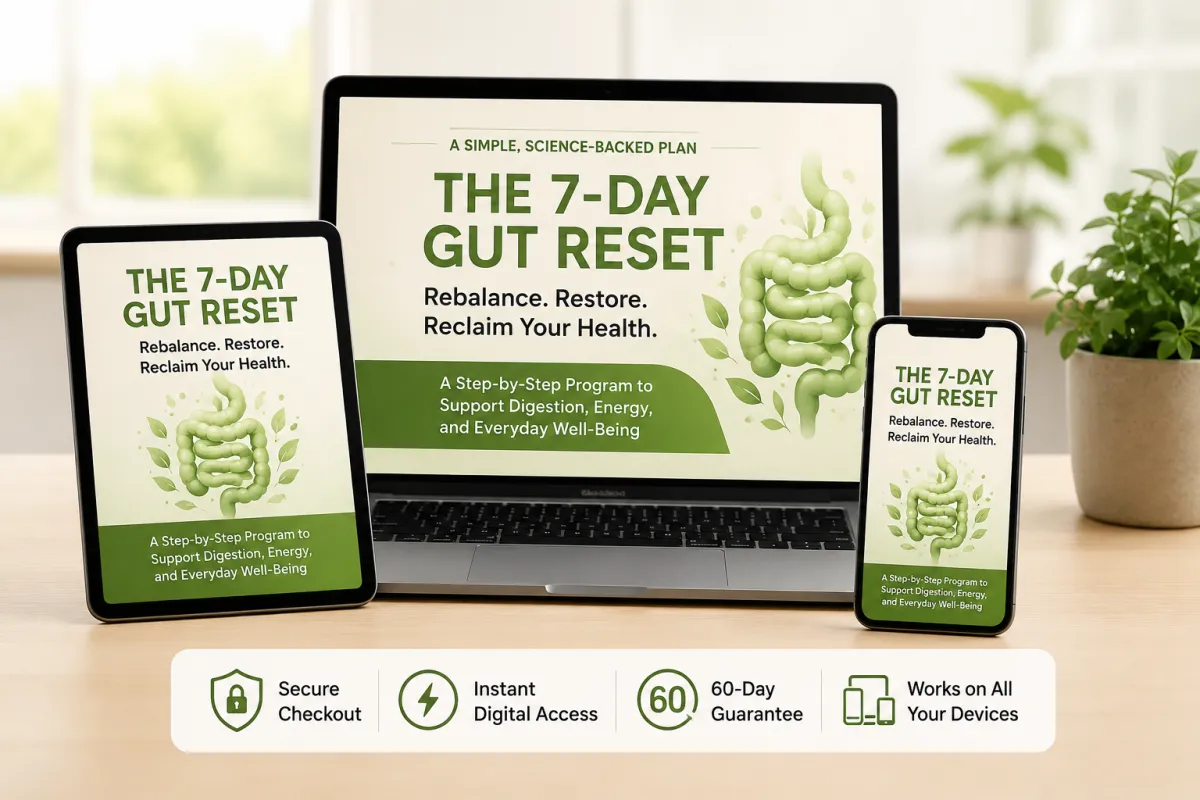
BUY NOW FOR $27

Could gut health be more complicated than simply adding probiotics and fiber?
Research increasingly suggests that it is.
If you're still experiencing bloating, changes in digestion, low energy, or other concerns despite trying probiotics or changing your diet, there may be more to consider than the microbiome alone.
Your gut exists within a much larger biological system.
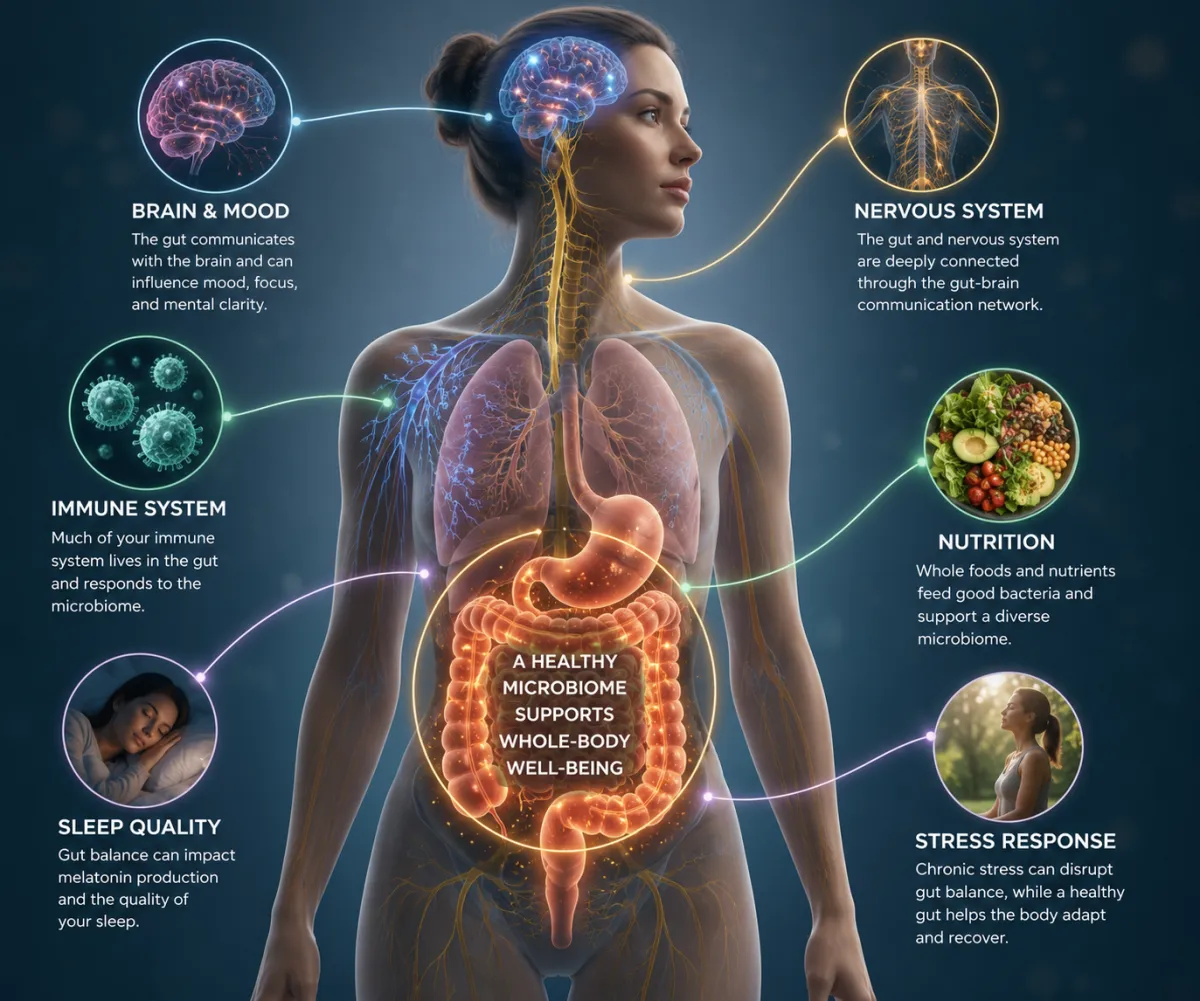
The microbiome, intestinal barrier, immune system, nervous system, diet, medications, sleep, stress, and other factors can interact in complex ways.
One particularly interesting area of research is the relationship between gut microbes and the immune system.
Gut microorganisms produce metabolites and other compounds that can interact with immune cells and influence immune signaling.
At the same time, the immune system helps shape the intestinal environment in which those microorganisms live.
Researchers are continuing to study this two-way relationship and what it may mean for human health.
Your microbiome, intestinal barrier, and immune system work together — and each can influence the others.
Processed foods can influence the gut environment .
Chronic stress can affect gut and immune function .
Antibiotics can alter the gut microbiome .
Sleep and gut health are closely connected.
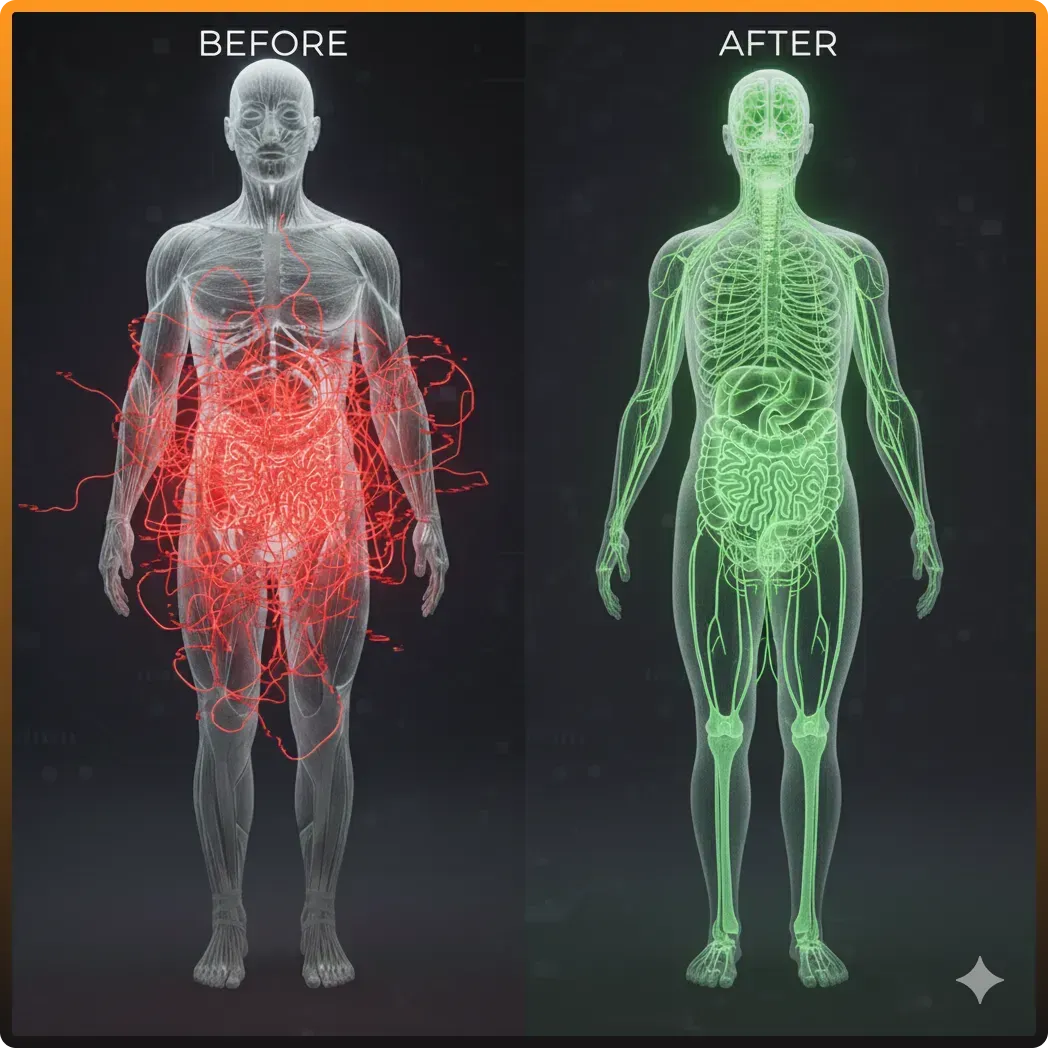
Every modern stressor piles on, scrambling the gut-immune system…
Over time, you may feel drained, uncomfortable, and unsure what your digestion will do next.

BUY NOW FOR $27
THE COMPLETE GUT HEALTH EDUCATION PROGRAM
ONE-TIME PAYMENT • INSTANT DIGITAL ACCESS
If probiotics alone haven’t given you the answers you were hoping for, that doesn’t necessarily mean you’ve been approaching gut health incorrectly. It may simply mean there’s more to the story.
The microbiome is part of a larger system that includes your intestinal barrier, immune system, nervous system, diet, stress, sleep, and other individual factors.
That broader perspective is the idea behind The Microbiome Communication Reset.
Instead of focusing on one supplement or one “perfect” diet, the program helps you understand the gut–immune connection and introduces practical ways to support overall gut health.
Instead of focusing on random probiotics or restrictive diets, this program takes a broader look at the factors that can influence your gut health.
Step 1: Identify potential disruptors:
Learn how diet, stress, medications, sleep, and other lifestyle factors may influence your gut environment.
Step 2: Support the gut environment:
Explore fibers, nutrients, and dietary patterns that may support the microbiome and overall gut health.
Step 3: Retrain the response: Learn how the gut microbiome and immune system interact—and practical ways to support this important relationship.
Supporting gut health involves more than one single pathway.
Research continues to explore how the microbiome interacts with digestion, immune function, metabolism, and the nervous system.
Learn how diet and other lifestyle factors may influence digestive health.
Explore the relationship between the gut microbiome and mmune system.
Understand the emerging science behind the gut-brain connection.
Discover practical strategies that may help support a healthy gut environment
BUY NOW FOR $27
SAVE $901 TODAY!
RESTORE YOUR GUT HEALTH NOW AT JUST $27

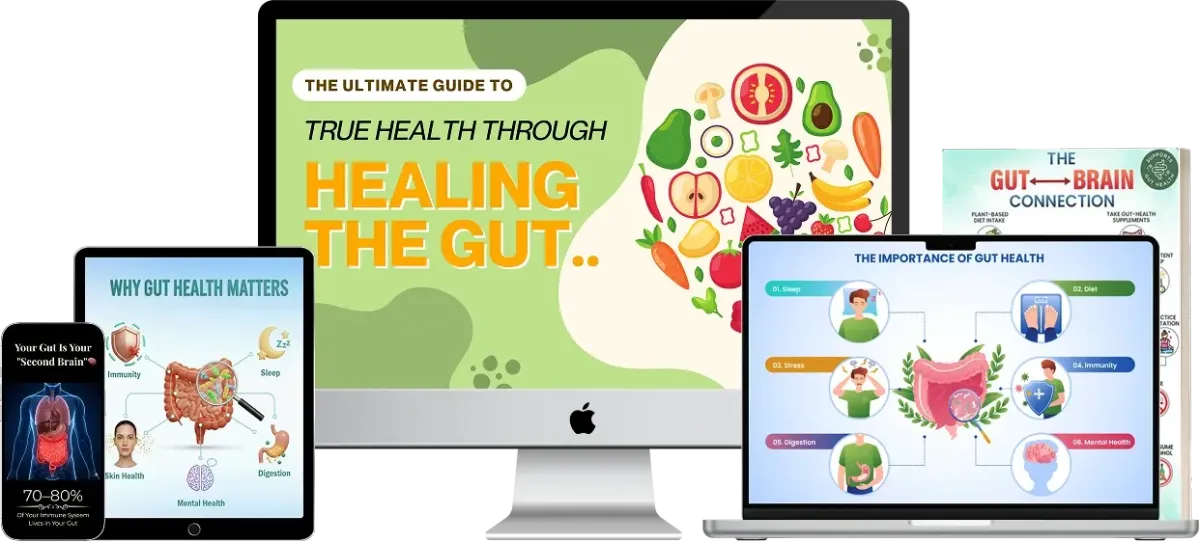
The Ultimate Guide to Supporting Gut Health
A practical 4-phase roadmap to help you understand the gut microbiome, gut-immune connection, and the everyday factors that may influence digestive health.
Here’s what you’ll learn to support:
🌱 A healthier gut environment through diet and lifestyle choices.
🌱 The gut-immune connection and how these systems interact.
🌱 Better everyday habits involving food, stress, sleep, and other factors that influence gut health.

Johns Hopkins Medicine describes the gut microbiome as playing an important role in digestion and immune function. Research continues to investigate how microorganisms in the gastrointestinal tract interact with the immune system and influence human health.
UCLA Health has reported on research exploring connections between the gut microbiome and the brain. Gut microorganisms can influence signaling molecules and pathways involved in the gut-brain axis, although researchers are still investigating what these relationships mean for mood and human health.
Nature Communications (2022) published research identifying associations between the composition of the gut microbiome and depressive symptoms. The findings add to growing research investigating relationships between gut microorganisms and mental health — but they do not establish that the microbiome alone causes depression.
What does this research mean for everyday gut health?
Research into the microbiome is revealing that gut health is far more complex than simply adding a probiotic or eliminating certain foods.
Your microbiome exists within a larger system involving the intestinal environment, immune system, nervous system, diet, sleep, stress, medications, and many other individual factors.
The Microbiome Communication Reset was created to help make that complicated science easier to understand.
Rather than promising a quick fix, the program helps you explore factors that may influence your gut environment and introduces practical strategies you can consider as part of your everyday routine.
Because understanding what may be influencing your gut health can be an important first step toward making informed choices about how you support it.
This program is educational and is not intended to diagnose, treat, cure, or prevent disease or replace individualized medical care.
A PRACTICAL GUIDE TO UNDERSTANDING YOUR GUT MICROBIOME
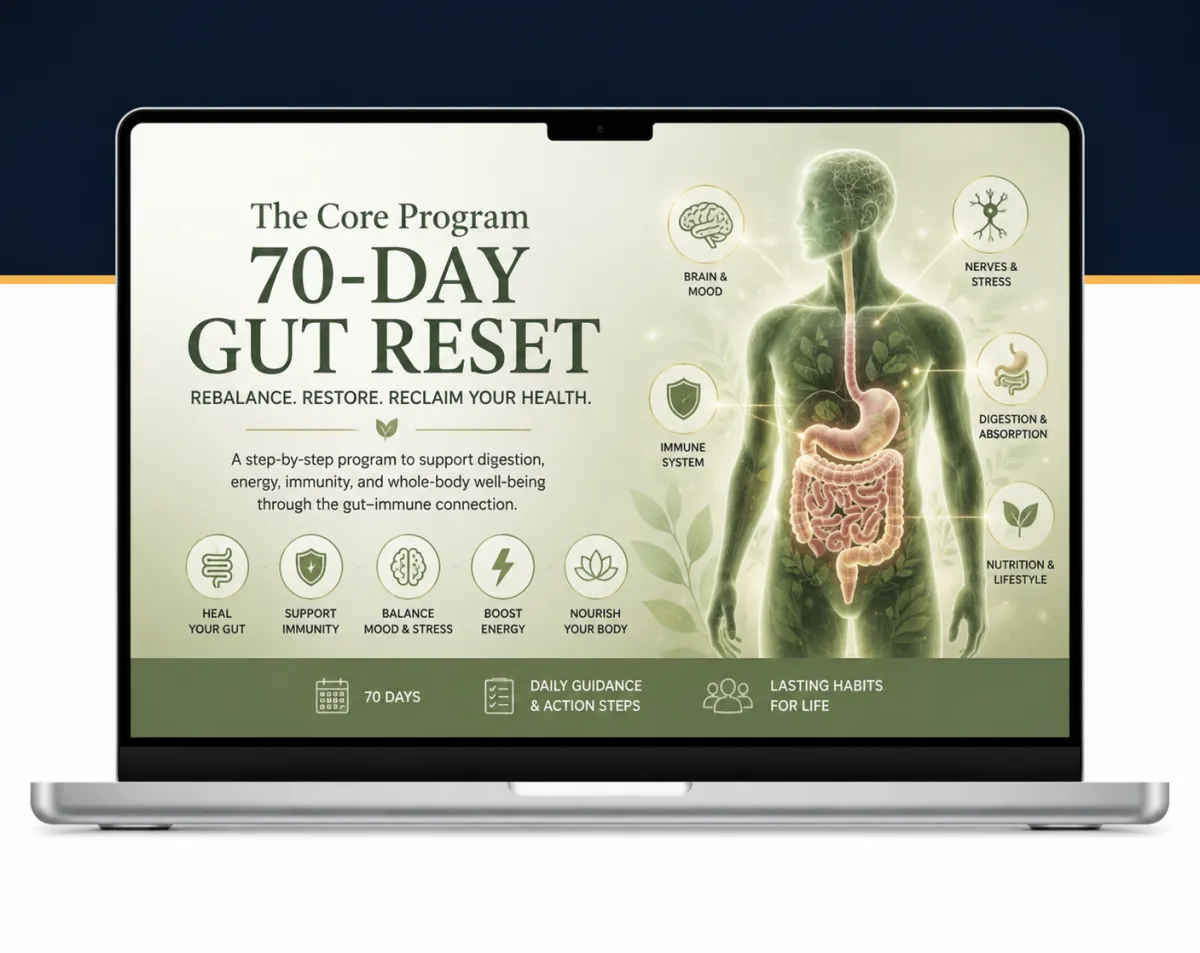
The Core Program: Your 70-Day Gut Health Roadmap
Explore everyday factors that may influence your gut health, energy, and overall well-being.
Understand how sleep, stress, diet, medications, and lifestyle fit into the gut-health picture.
Build simple, gut-supportive habits into your daily routine
Learn how foods can affect people differently—without overly restrictive rules.
Create balanced, sustainable eating habits while still enjoying your food.
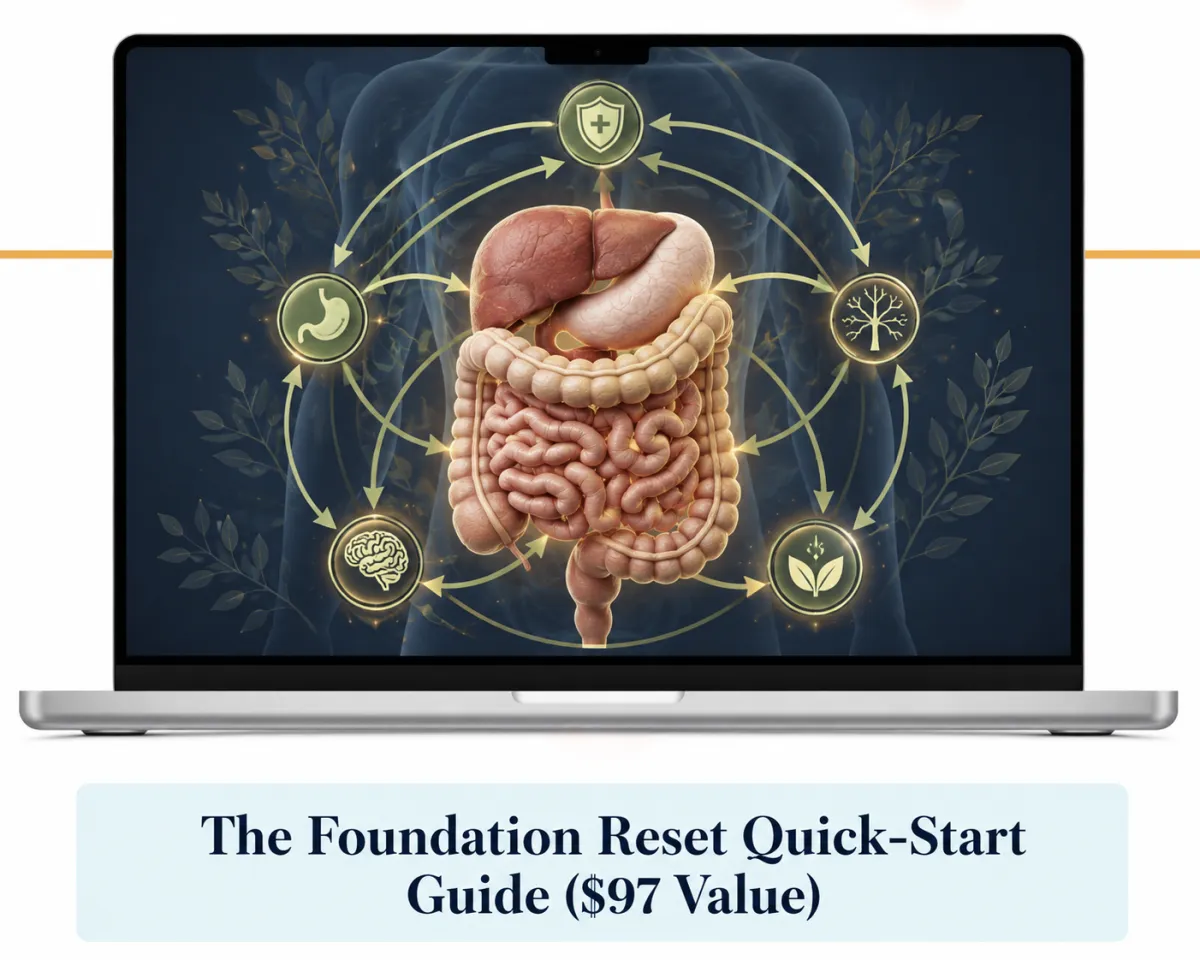
The Foundation Reset Quick-Start Guide ($97 Value)
3 commonly overlooked foods that may affect digestion — and what to consider instead
A simple hydration strategy and why timing can matter for energy and mental clarity
A quick post-meal technique designed to support more comfortable digestion
4 everyday spices and simple ways to incorporate them into a gut-supportive routine
The “stealth swap” approach for making healthier food choices without feeling like you’re constantly dieting
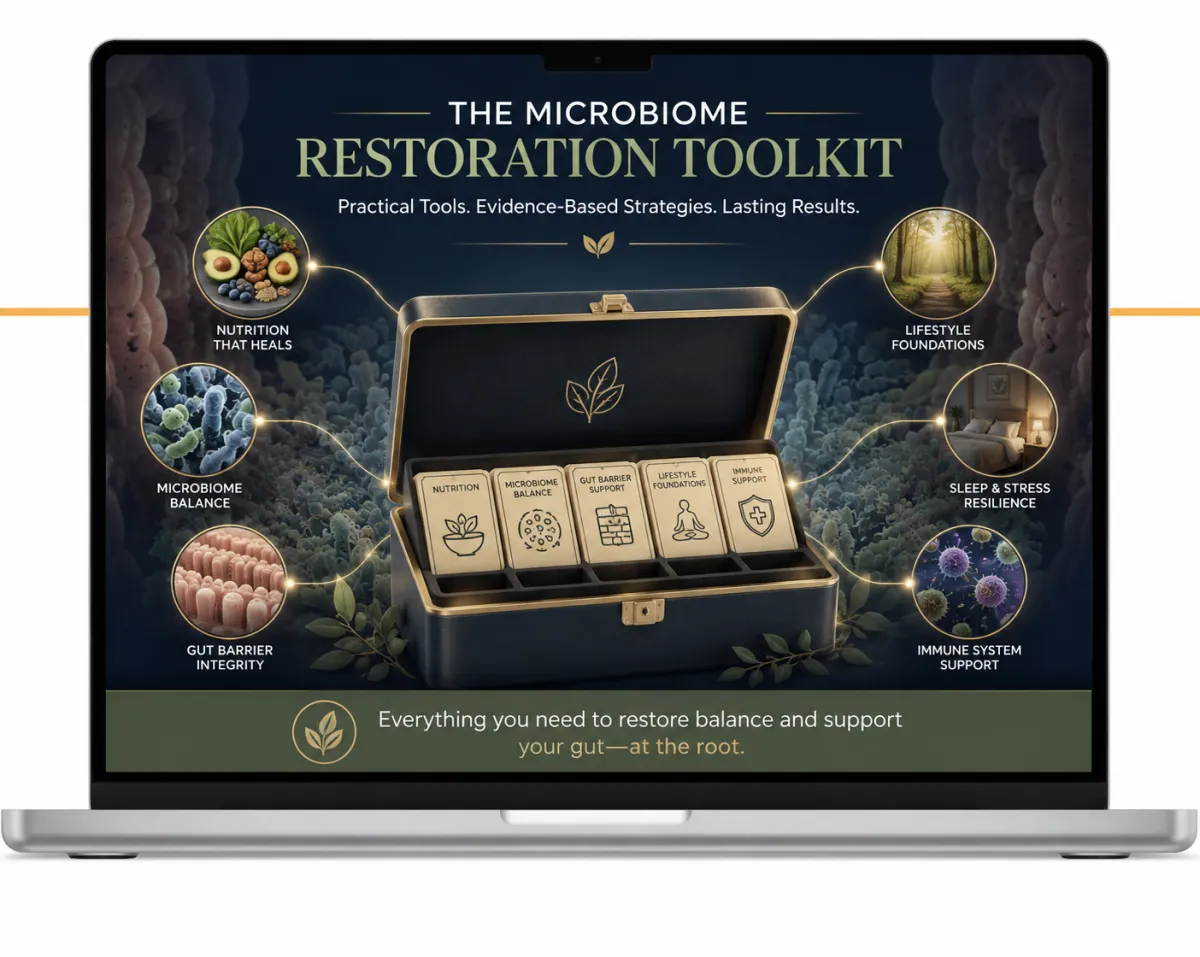
The Microbiome Restoration Toolkit ($147 Value)
Use everyday vegetables to support a more diverse microbiome.
Spot common kitchen habits that may influence your gut microbiome.
Learn how to introduce fermented foods gradually and comfortably.
Discover a simple cooking-and-cooling technique that increases resistant starch.
Try the Microbiome Diversity Challenge to add more plant variety to your week.
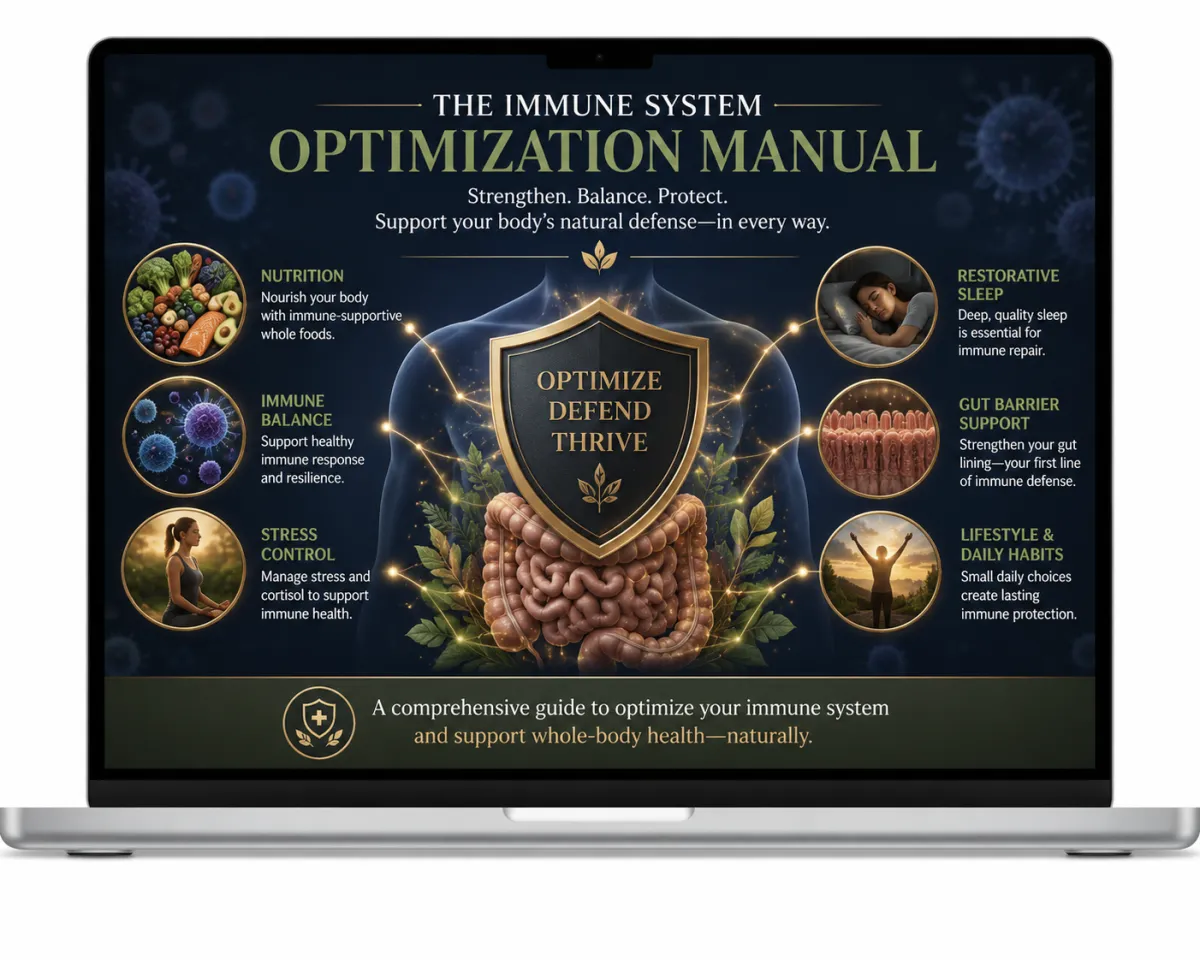
The Immune System Optimization Manual ($127 Value)
Everyday spices and foods that research suggests may help support a healthy inflammatory response
A simple 10-minute post-meal routine designed to support digestion, metabolic health, and steady energy
Practical stress-management strategies for supporting the gut-brain connection and becoming more aware of stress-related eating patterns
Simple sleep-supporting habits and why quality sleep matters to your gut, immune system, energy, and overall health
How meal timing may influence energy, appetite, and metabolic health — plus practical ways to find a routine that works for you
But wait... That’s not it!
Exclusive Bonuses worth $164 for free!

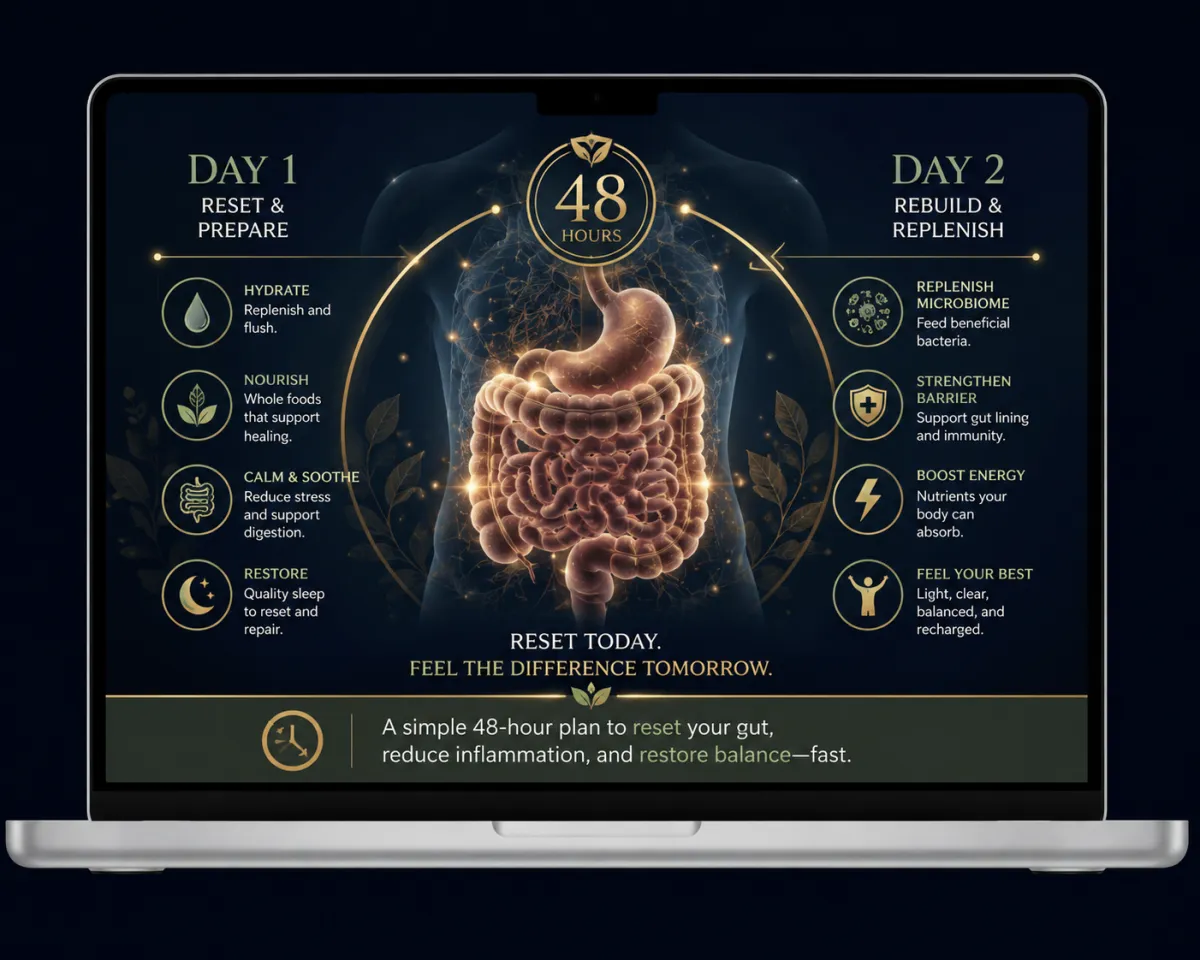
The 48-Hour Gut Reset Protocol ($97 Value)
: A simple 48-hour plan for supporting digestive comfort
The ‘peace treaty’ approach to supporting a calmer gut environment
3 everyday ingredients and how they may support a healthy inflammatory response
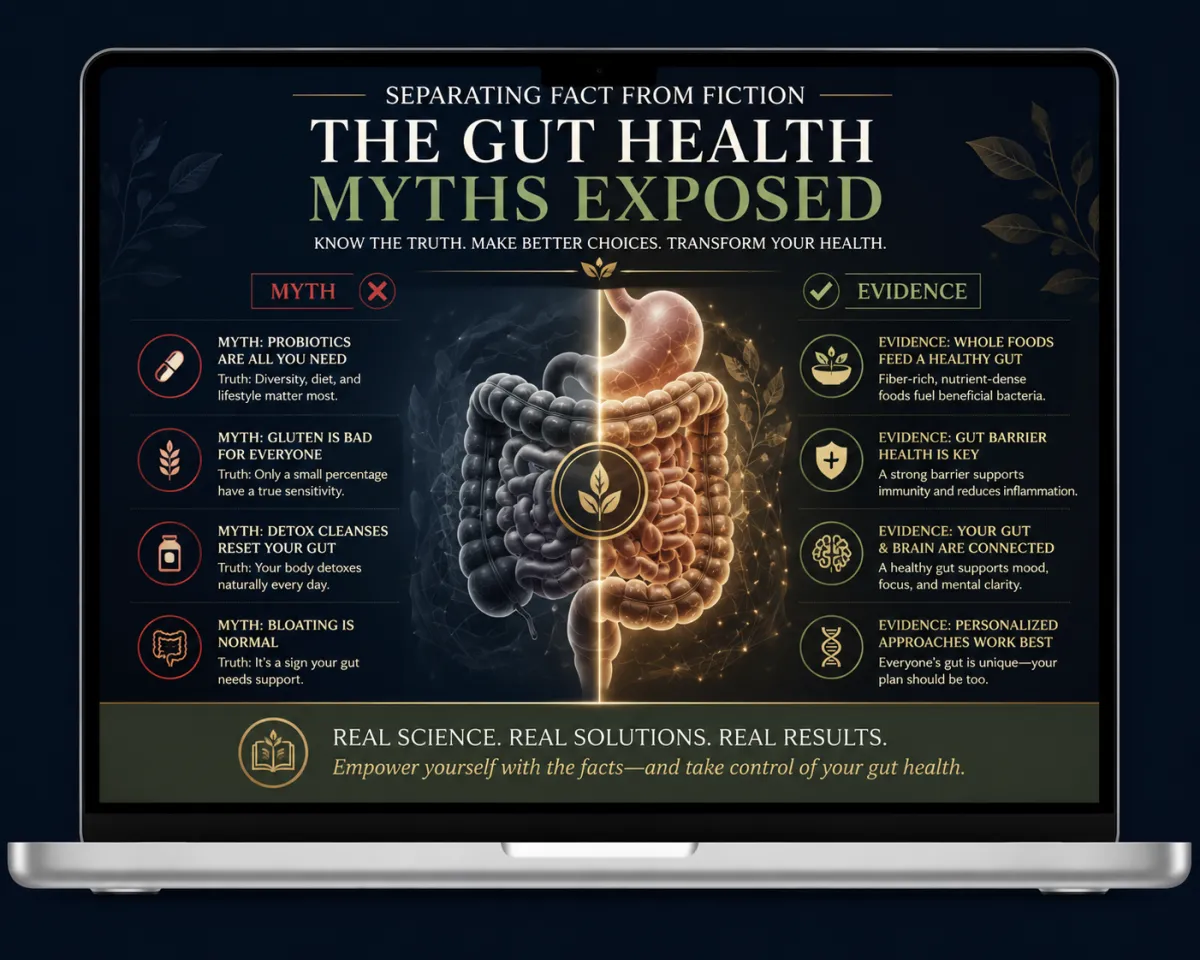
The Gut Health Myths Exposed Audio Series ($67 Value)
Why more fiber isn’t always the answer — and what to consider instead
What probiotics can — and can’t — do for gut healt
What the science really says about intestinal permeability and gut health
Total Value: $928
Your Investment Today: Just $27
It’s easy to spend hundreds of dollars trying different probiotics, supplements, and restrictive diets without ever understanding the bigger picture. The Microbiome Communication Reset gives you a practical, science-informed way to look at gut health — for just $27.
The "Gut Harmony or Your Money Back" Guarantee
Try The Ultimate Guide to True Health Through Healing the Gut for 60 day
If you decide the program isn’t right for you, simply contact us within 60 days for a full refund.
Simply email us at [email protected] with the subject line "Refund Request" and we'll return every penny within 48 hours.
No complicated forms. No hoops to jump through.
You can explore the program knowing your purchase is backed by our 60-day money-back guarantee.
This means your only risk is staying stuck with the same gut problems you have right now.
Why "I'll Start Monday" Doesn't Work For Your Gut
“Your gut responds to what you do every day—not just what you do on Monday.”
Your gut bacteria respond to what you eat, how you sleep, your stress, and your daily habits.
Your digestive and immune systems are continually responding to signals from your environment and lifestyle.
You don’t need to wait for Monday, next month, or a New Year’s resolution to begin supporting your gut.
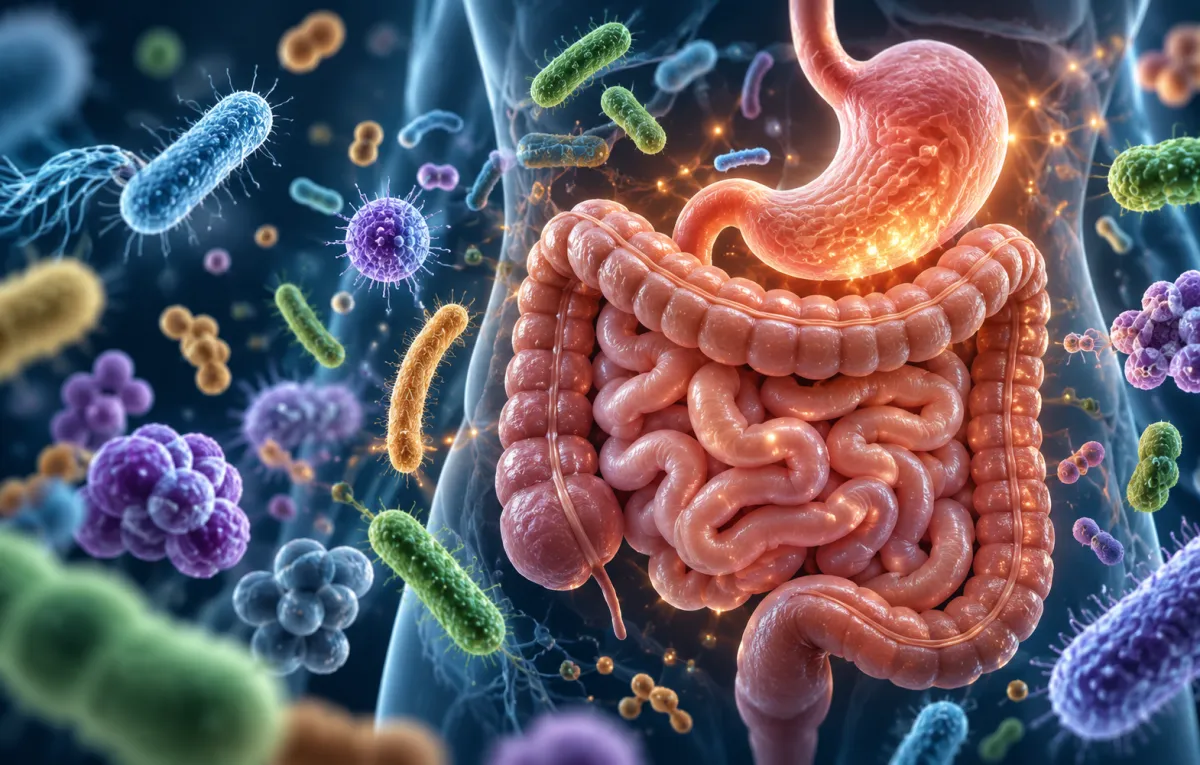
Here’s what’s happening right now, inside your body:
Stress can influence digestion, the gut barrier, and the way your gut and brain communicate.
Every meal is an opportunity to support the diversity and balance of your gut microbiome.
Sleep gives your body time to regulate many of the systems connected to digestion, metabolism, and immune function.
Your everyday habits can influence the environment in which your gut microbes live
These signals don't happen once in a while. Your gut is responding every day—to what you eat, how you sleep, how you manage stress, and how you live.
And that's actually good news.
Your gut responds to what you do every day—not just what you do on Monday.
Here's What To Do Now
Click the button below
Complete the secure checkout
Get instant access to the complete program
Start with Step 1 today
🔒 256-bit SSL secure checkout
✅ Instant digital delivery
💯 60-day money-back guarantee
📱 Works on all devices
Your Gut Is Always Responding to Your Environment
Your gut microbiome is dynamic. It can respond to changes in diet, sleep, stress, medications, activity, and other aspects of everyday life.
🌱 The foods you eat can influence which microorganisms have the resources they need to thrive.
🌱 Stress can affect digestion, intestinal function, and communication along the gut-brain axis.
🌱 Sleep and circadian rhythms are connected with metabolism, immune function, and the gut microbiome.
🌱 Small, consistent lifestyle choices can help create an environment that supports overall gut health.
You don’t have to change everything at once. You just need a place to begin.
Which Future Will You Choose?
Fast forward one year from today.
FREQUENTLY ASKED QUESTIONS
Q: I’ve tried everything. How is this different?
Most gut-health approaches focus heavily on a single strategy, such as probiotics, supplements, or eliminating certain foods.
The Microbiome Communication Reset takes a broader approach. It helps you understand how diet, sleep, stress, medications, lifestyle, the microbiome, and other factors can interact—and gives you practical strategies for supporting your overall gut health.
Q: Do I need expensive supplements or special foods?
No. The program focuses on practical strategies that can be incorporated into everyday life. You’ll learn about foods, dietary patterns, and lifestyle habits that may support gut health without requiring expensive supplements or specialty products.
Q: What if I have IBS, Crohn’s, or another medical condition?
The program is educational and is not designed to diagnose or treat IBS, Crohn’s disease, or any other medical condition. If you have a diagnosed gastrointestinal condition, take prescription medications, or are under medical care, talk with your healthcare professional before making significant changes to your diet or health routine.
Q: How much time does this take daily?
The program is designed to fit into everyday life rather than become another full-time project. You can work through the educational material at your own pace and gradually incorporate the strategies that make sense for you.
Q: How quickly might I notice a difference?
Everyone is different, so there is no single timeline for noticing changes. Gut health can be influenced by many factors, including diet, sleep, stress, medications, existing health conditions, and lifestyle.
Q: How much time does this take daily?
Everyone is different, so there is no single timeline for noticing changes. Gut health can be influenced by many factors, including diet, sleep, stress, medications, existing health conditions, and lifestyle.
Q: Is there a guarantee?
Yes. Your purchase is backed by a 60-day money-back guarantee. Take time to explore the program, work through the educational materials, and put the practical strategies into action.
If you decide the program isn't right for you, simply contact us within 60 days for a full refund.


You’re still dealing with bloating, fatigue, and brain fog. You’ve tried supplements, restrictive diets, and countless “gut hacks” — but you’re still searching for answers.


You look back at this as the day you finally took a different approach. Instead of chasing one symptom at a time, you began supporting your gut health with a clear, step-by-step plan — and started feeling more confident about what to do next.
Both futures are possible. Only one begins today.
🔒 256-bit SSL secure checkout
✅ Instant digital delivery
💯 60-day money-back guarantee
📱 Works on all devices